
Mechanical Components Factory
A 6,800 m² floor with 100+ employees and 100+ production machines is a manufacturing plant, not a desk. The scale matters for material matching because the same equipment runs prototypes and production. The process you validate on one part scales to volume.
Scale also means redundancy. With more than 100 machines, one job does not wait behind another, and a down machine does not stall a schedule. For you, that translates to a process that survives the normal friction of a running plant.
The size also holds the inspection bench, which is 20+ instruments, and the material store where incoming bar waits for its XRF check. A factory is not just the machines; it is the inspection bench and the material store, and the 6,800 m² has to house all three in a layout that lets the material flow from door to machine to bench without backtracking.
Size also decides how the factory handles batch sizes without breaking the flow. A single prototype moves through the same floor as a thousand-part run, and the 6,800 m² is laid out so neither blocks the other. That is the practical meaning of scale: the plant can absorb a rush job or a large order without pulling the floor out of its normal rhythm.
Which certifications does the factory hold?
| Standard | Certificate number | Scope |
|---|---|---|
| ISO 9001:2015 | 116024/A/0001/UK/En | Machining of metal parts |
| IATF 16949:2016 | 131941/A/0001/SM/En | Manufacture of CNC metal machining parts (excludes product design, Clause 8.3) |
| ISO 14001:2015 | 116024/B/0001/UK/En | Environmental management related to machining of metal parts |
The numbers are stated so they can be checked, not hidden. You can call the registrar and confirm each certificate, its scope, and its standing, which is what separates a certified plant from one that claims to be.
The IATF 16949 scope note is the honest part. The certificate covers manufacture, and it excludes product design under Clause 8.3, which means the factory is build-to-print: you own the design, and the factory owns making it repeatably to your print. A factory that states the exclusion is telling you exactly where its accountability begins and ends.
Three certificates cover three different promises. ISO 9001 covers the quality system, IATF 16949 covers the automotive-grade discipline on top of it, and ISO 14001 covers the environmental management around the machining. You read all three scopes together to see the full shape of the plant's accountability.
The certificates are not wall decorations; they are the result of a registrar's audit, and they have to be re-audited to stay current. If you ask for the certificate numbers and then check them with the registrar, you are doing exactly what the certificates are designed to enable. A plant that resists that check is a plant whose certificates may not be what it claims.
How does the floor verify material before machining?
Incoming bar is XRF-checked against the mill certificate before a chip is cut, so the alloy is confirmed, not assumed. A material certificate with a heat number follows the batch through production — the material-to-process match only works if the material is what the drawing says.
The XRF check is the factory's first inspection, and it runs before any value is added. Catching a wrong alloy at the door costs minutes; catching it after machining costs the batch.
The check is physical, not paper. The XRF reads the elemental composition of the bar and compares it to the mill certificate, so a mislabeled 304 shows its missing molybdenum and a mixed 6061 shows its extra zinc. The paper and the bar have to agree before the bar is released to the floor.
The material store is part of the same discipline. Incoming lots are segregated until the XRF clears them, so a suspect bar never reaches a machine by accident. The segregation is the physical form of the verification: a cleared lot and an uncleared lot are not allowed to share the same rack.
Can a buyer visit the factory before ordering?
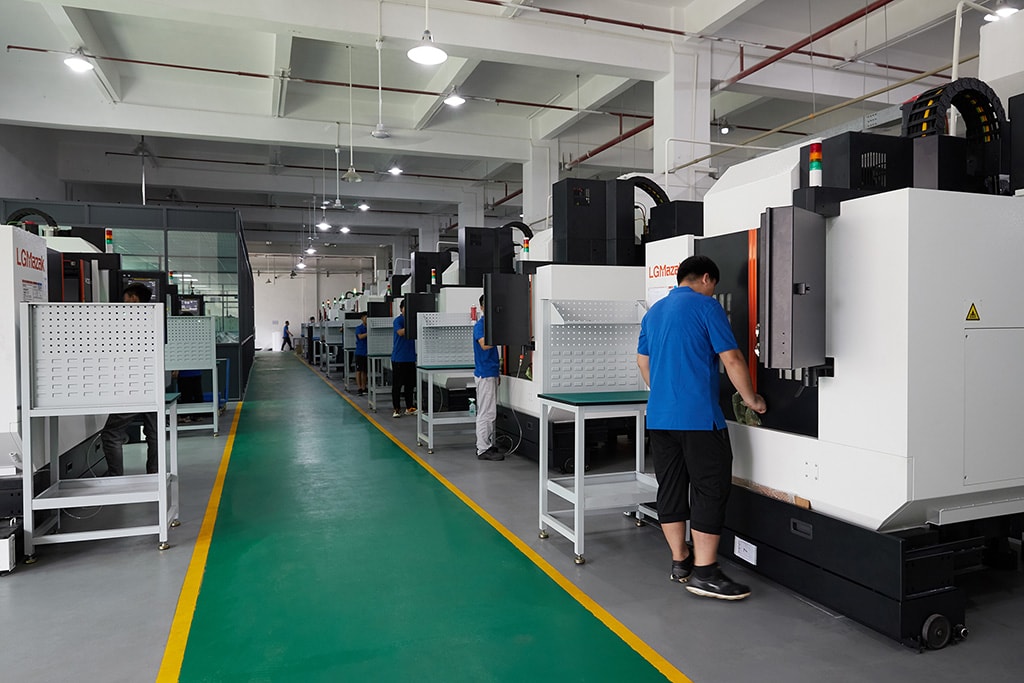
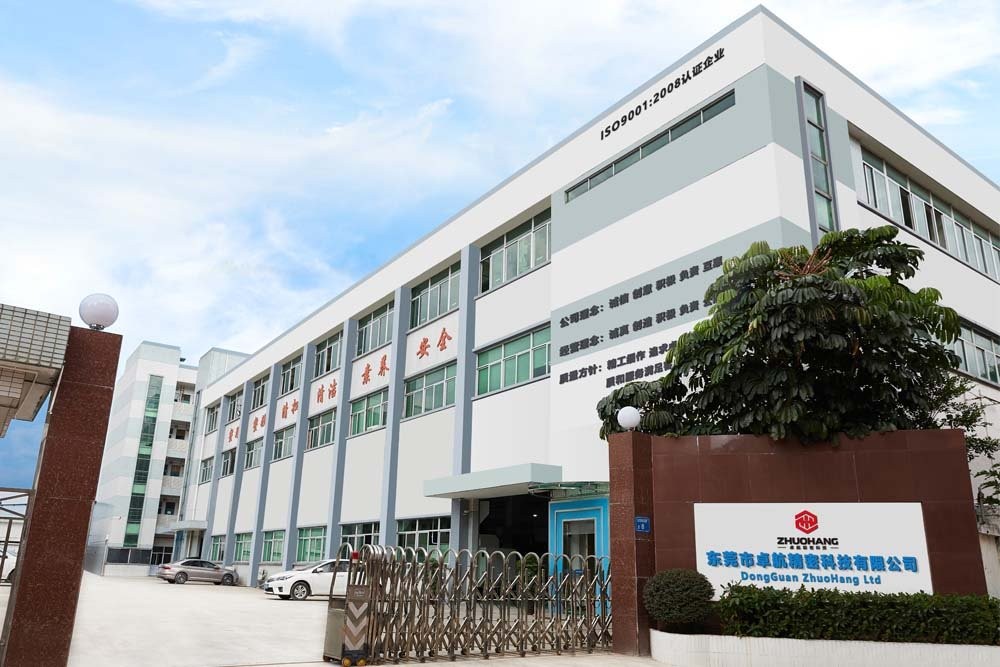
A site visit is the strongest due-diligence step you can take, and a manufacturer that claims a material-to-process match should welcome it. You can tour the floor, watch the inspection bench, and review the quality records in person.
During a visit, three things tell you more than any brochure: whether the machines are running, whether the inspection bench is staffed, and whether the material certificates are pulled on request. A plant that can show all three is not hiding anything.
The visit also reveals the layout truth. Does the material flow from door to machine to bench in one direction, or does it criss-cross the floor? Does the XRF sit at incoming inspection, or is it a dust-covered instrument in the corner? The floor is the factory's real answer to every claim on this page.
A visit is also when you should ask for the documents that do not photograph well — the XRF log, the last Cpk chart, the control plan for a current part. A factory that produces these on request is treating you as an auditor, which is exactly what a supplier should do. A factory that stalls on the documents is telling you the visit has already found what it needed to find.
Visits are arranged through the sales contact. The address is No. 8, Shuibian Songyuan Road, Hengli Town, Dongguan, Guangdong, China 523470.
What should a buyer confirm about the factory before committing?
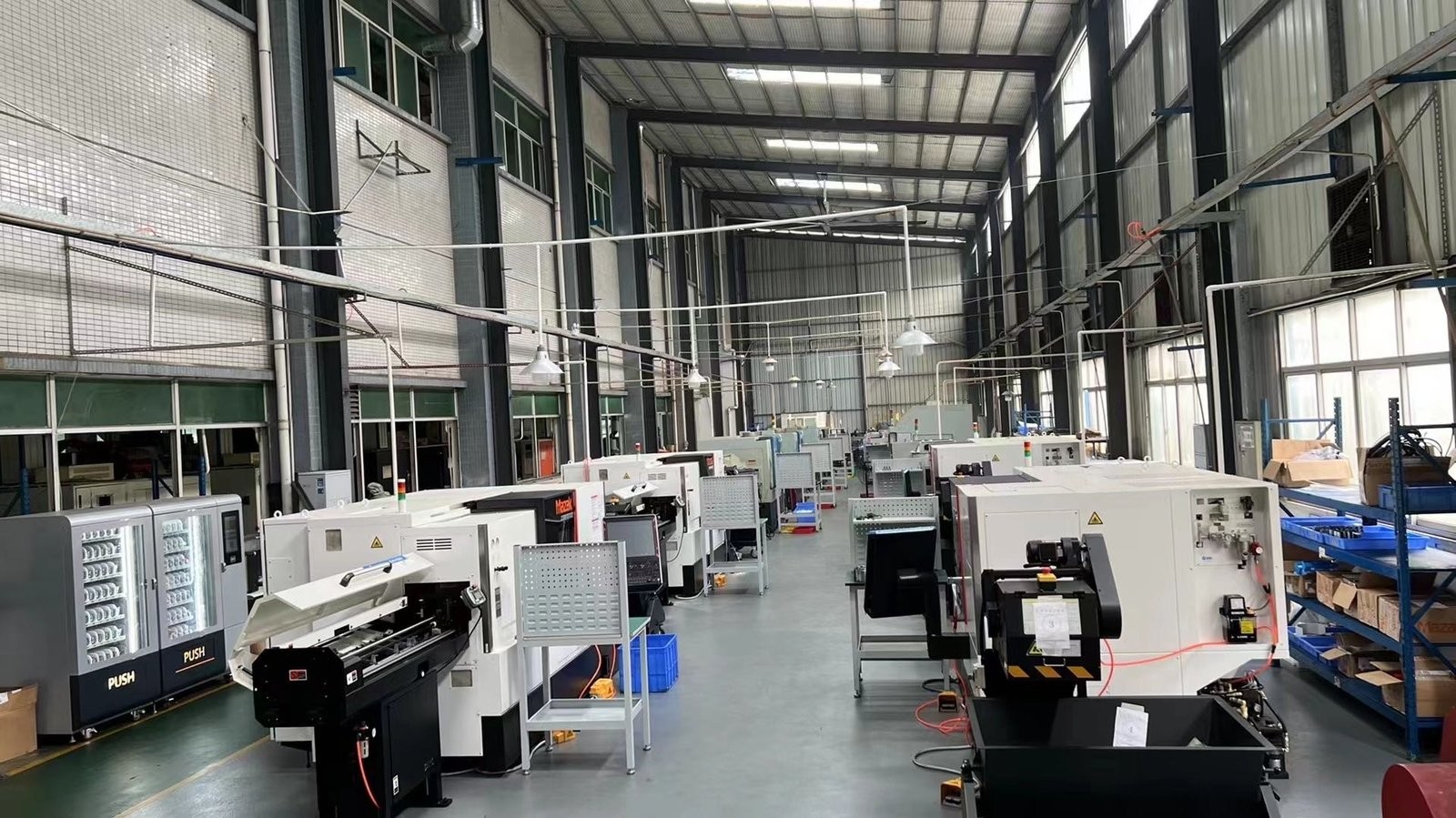
These checks separate a verifiable plant from a claimed one.
- The legal identity matches public records.
- The material is XRF-verified, not assumed.
- The machine mix fits your alloy and geometry.
- The certificate numbers are stated and verifiable.
- The floor layout shows material flowing, not sitting.
How does a buyer verify the factory before committing?
Verification is a set of actions, not a feeling. Run each of these and the plant either clears or it does not.
- Look up the registration number and address in public records and confirm they match.
- Call the registrar with the three certificate numbers and check the scopes.
- Tour the floor and confirm the machine mix matches what was quoted.
- Ask to see the XRF log for incoming material, not just a description of it.
- Request a material certificate for a sample batch and trace the heat number.
- Watch a machine run and confirm the feeds match the alloy being cut.
What this shop actually runs
We machine every part in our own 6,800 m² plant in Dongguan, China, on 100+ CNC machines with 100+ staff. The machine list by category:
- 5-axis machining centres (10+) - Mazak VARIAXIS I-600 (510/910/510 mm travel, 12,000 rpm, 22 kW, 71.6 N·m, 30-tool BT40) and Mazak INTEGREX I-250H S (B-axis 0.0001°, 24 kW, 124 N·m, 38-tool HSK-A63). Meant for compound-angle parts, single-setup multi-face prismatic work, and aerospace fittings where datum transfer loss is unacceptable.
- 3-axis / 4-axis machining centres (50+) - Brother SPEEDIO S500Z2N / S700Z2N (10,000 rpm, 14/21-tool ATC, 0.7 s tool-to-tool, Z-axis 2.2 G) and Mazak VCE-430A L / VCE-570C L (10,000 rpm, 118 N·m, 24-tool ATC). Meant for prismatic parts, plates, brackets, housings.
- Swiss-type turning centres (10+) - Citizen Cincom A20-3F7 (Φ20 mm, 10,000 rpm), TSUGAMI B0206-III / B0205-III (Φ20 mm, 0.1 µm), STAR SR-32JII / SR-32J Type N (Φ32 mm, 8,000 rpm). Meant for long, slender rotational parts at ±0.002 mm.
- CNC turning centres (20+) - HEADMAN T70M/1250 (720 mm swing, 117 mm bore, 3,000 rpm, BMT75 12-station turret). Meant for shafts, bushings, flanges up to ±0.002 mm.
- Wire EDM (5+) - Sodick AQ535L (550/350/300 mm travel, ±20° taper, 800 kg workpiece). Meant for hardened tool steel, internal splines, sharp internal corners that milling cannot reach.
- Inspection: Hexagon CMM + 20+ gauges - Hexagon CMM for coordinate measurement, plus vision system, profilometer, hardness tester, coating thickness gauge, XRF for material verification. The 10:1 rule (gauge 10x more accurate than the band) is applied to every feature.
- Machine highlights - VARIAXIS I-600: one-setup multi-face 5-axis + MAZA-CHECK auto-calibration; INTEGREX I-250H S: DONE-IN-ONE mill-turn, B-axis 0.0001° + Ai thermal shield; SPEEDIO S500Z2N / S700Z2N: Z-axis 2.2 G + 0.7 s ATC; Swiss-type: guide-bush switchable + 0.1 µm resolution.
Tolerance: ±0.003 mm CNC milling / ±0.002 mm CNC turning / ±0.002 mm grinding and wire EDM. Capability: Ppk >= 1.67 initial on key characteristics, Cpk >= 1.33 ongoing.
Certificates: ISO 9001:2015 (116024/A/0001/UK/En), IATF 16949:2016 (131941/A/0001/SM/En, with design clause 8.3 excluded, stated openly) and ISO 14001:2015 (116024/B/0001/UK/En), issued to Dongguan Zhuohang Ltd, registration 91441900MA4UWT6X39, founded 2005.
Where we ship: Austria, Belgium, the Czech Republic, Denmark, France, Germany, Greece, Hungary, Ireland, Italy, the Netherlands, Spain, Sweden and the United Kingdom in Europe; Brazil, Canada, Mexico and the United States in the Americas; China, Israel, Japan, Singapore and Sri Lanka in Asia; Australia and New Zealand in Oceania; and South Africa in Africa — plus other countries and regions worldwide, shipped from our base in Dongguan, China.
Contact: Felipe Iglesias, [email protected], +86 13126536955.
Visit the factory that matches material to process
Email [email protected] or call +86 13126536955 to arrange a tour of the floor and the quality records.
Frequently Asked Questions
What is the legal identity of the factory?
The legal name is Dongguan Zhuohang Ltd, registration number 91441900MA4UWT6X39, founded in 2005. The factory address is No. 8, Shuibian Songyuan Road, Hengli Town, Dongguan, Guangdong, China.
How does the factory support material-to-process matching?
The machine mix — 3/4/5-axis milling, turning, mill-turn, and grinding — lets each alloy route to the process that cuts it best, and XRF verification at incoming inspection confirms the alloy before it reaches a machine.
What machines does the factory run?
Mazak, Brother, TSUGAMI, and Sodick machines, with Citizen and Star lathes on the turning side. The mix is chosen so each alloy has a machine that matches its machinability, from fast aluminum milling to slow, deliberate titanium turning.
How large is the facility?
6,800 m² with 100+ production machines, 20+ inspection instruments, and 100+ employees. The scale means prototype and production volumes run on the same equipment and process.
What certifications does the factory hold?
ISO 9001:2015 (No. 116024/A/0001/UK/En), IATF 16949:2016 (No. 131941/A/0001/SM/En), and ISO 14001:2015 (No. 116024/B/0001/UK/En), all with stated scopes and numbers verifiable with the registrar.
Can I visit the factory before ordering?
Yes. A factory visit is the strongest due-diligence step you can take. Contact [email protected] to arrange a tour of the floor, the inspection bench, and the quality records.
Standards referenced on this page
- ASTM B211/B211M-19 — Standard Specification for Aluminum-Alloy Rolled or Cold Finished Bar, Rod, and Wire
- ASTM A276/A276M-17 — Standard Specification for Stainless Steel Bars and Shapes
- ISO 9001 — Quality management systems — Requirements