
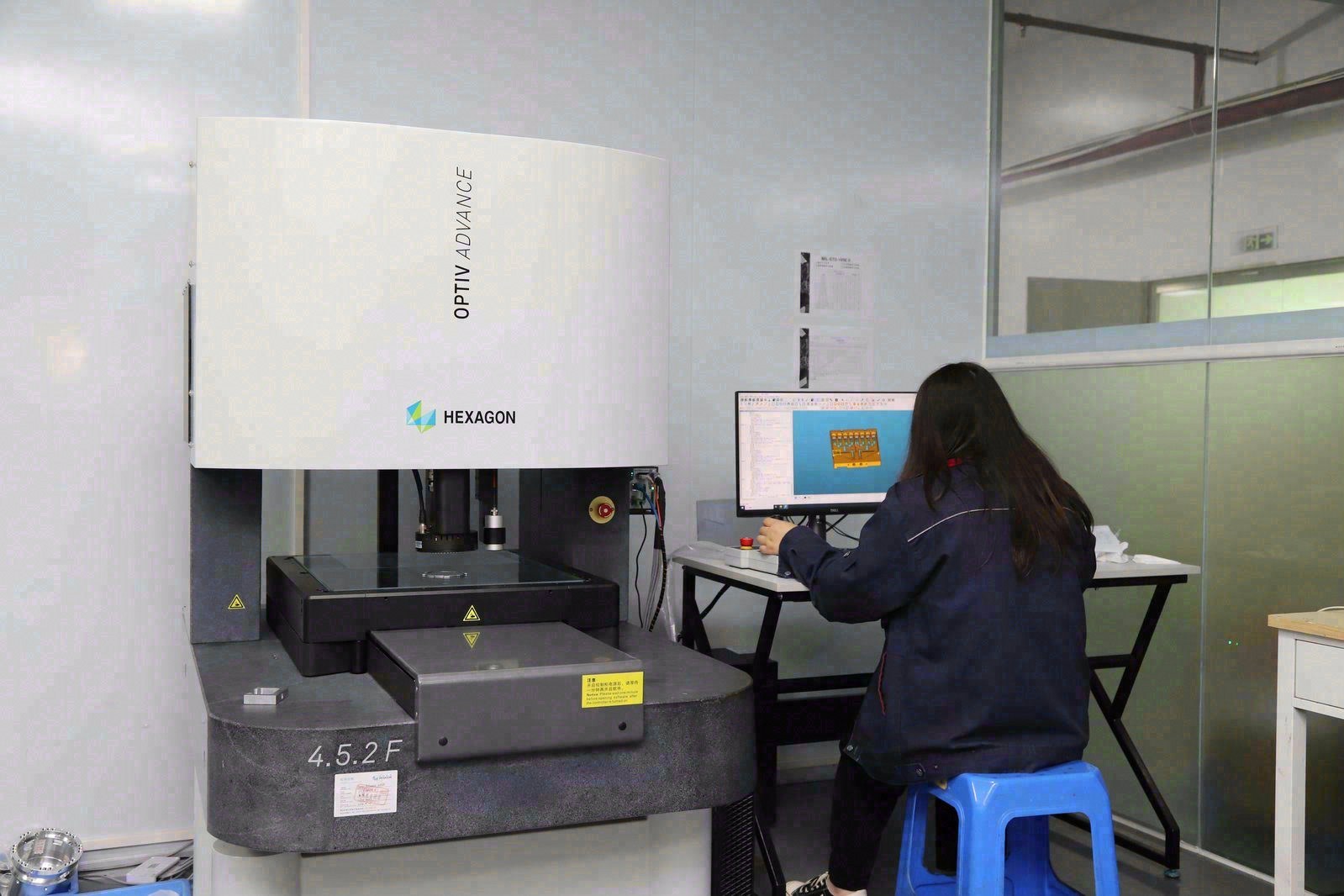
A medical mechanical component is purchased as a file as much as a part. The dimensions matter, but so do the material record, the quality system evidence, the cleaning and packaging, and the traceability that ties one lot of metal to one finished component in a patient's file years later. When the shop is in China, that file has to be specified at the RFQ stage, because a supplier produces what is written into the order.
1. Which documentation does a medical component actually need?
Start with the documents the drawing implies, because on medical work they are part of the device file. At minimum: a material certificate tied to the heat or lot of the stock that was actually cut; a dimensional report measured against your drawing revision; and, for a first build, a first article report that records every characteristic with the measured value and the instrument used. Where the component is patient-contact or the drawing calls for it, add cleanliness evidence and packaging confirmation to the set.
The practical discipline is to name the document set in the RFQ and refuse to treat it as optional. A medical component whose certificate arrives two weeks after the parts is a component whose release is delayed two weeks, because your quality system cannot accept it without the evidence. List the documents as line items with the quotation, and review a sample of each format before the first production lot so there are no surprises at release time.
Ask for sample formats during quoting, not after ordering. A supplier that sends its certificate layout, its dimensional report template, and its lot record format with the quotation is showing you the documents before they matter; one that promises "all documents included" without showing a format is asking you to accept an unknown file. On medical work the format is part of the requirement, because your quality system and your auditors will read it.
2. Which materials belong on a medical mechanical component drawing?
Medical machining concentrates on a short list of alloys. Stainless steels — 316L for corrosion resistance and cleanability, 17-4PH where high strength is needed in a small section — cover most instrument and device hardware. Titanium alloys such as Ti-6Al-4V appear where strength-to-weight, biocompatibility, or imaging behavior matters. Engineering polymers machined on the same centers fill the rest, chosen for their own sterilisation and wear properties. Every one of them must be named by grade and condition on the drawing.
The medical specific is the material route. For patient-contact and implantable components, the certification chain often runs deeper than a standard mill certificate — the alloy may need to trace back through approved suppliers to the original melt, with an auditable history at every step. That chain cannot be invented by a machining shop in China or anywhere else; it has to be purchased at the start. Confirm with your regulatory team which material documentation your device needs before you ask a shop to quote the metal.
Material and sterilisation interact, so the drawing should carry both. A grade that resists corrosion in the body may behave differently through repeated sterilisation cycles, and the cleaning chemistry used before sterilisation can attack a poorly chosen alloy. When the design is set, confirm the chosen material, finish, and cleaning step are compatible, that review happens on your side of the file, but the shop should be able to state how it cleans and packages so your own validation can begin from a clean baseline.
3. What should the material certificate prove for medical work?
The certificate has to prove that the specific heat of metal in the machine meets the standard on your drawing, which means reading it like an auditor rather than a clerk. The heat or lot number must appear and match the marking on the delivered bars or plate. The specification reference must be the one you flowed down, including the condition. Mechanical test values must be shown where the standard calls for them. And the document must be in English, because it is going into your device file and an auditor will read it years from now.
Watch the quiet failure modes that break medical material chains. A certificate naming a material family instead of a heat, an "equivalent" grade substituted without approval, or two lots of the same alloy mixed in one batch all make the file untruthful even when the metal is fine. Put the substitution rule in the RFQ — no grade change without written approval — and require incoming verification of the delivered stock against the certificate before machining starts.
4. Which quality system evidence matters, and what is ISO 13485's place?
ISO 13485 is the quality management standard written for medical devices, and it is the frame the device industry recognises. Whether your machining supplier must hold it depends on your device class and where you sell: many OEMs flow requirements down to component shops that operate on a certified ISO 9001:2015 system, adding contractual controls for material certification, first article inspection, cleaning, and record retention. If your program genuinely demands ISO 13485, ask for the certificate and read the scope — the scope names the processes and locations it covers.
The factory behind this site is ISO 9001:2015, IATF 16949:2016 (product design excluded) and ISO 14001:2015 certified, and its quality page documents the inspection and traceability evidence behind those certificates. The point for a medical buyer is not the logo on the wall; it is whether the documented system produces the records your device file requires. Ask to see a completed component file — certificate, dimensional report, lot record — and judge the system by what it generates, not by what it claims.
Whether the system is ISO 13485 or an ISO 9001-based system with medical flow-downs, the record language and retention are contractual matters. State that the certificate, reports, and lot records must be in English, agree the retention period with your quality team, and confirm the records survive the supplier's own data practices. A file that is readable today and retained for your audit window is a file your device can rely on; a file that exists only in the supplier's memory is not a file at all.
5. How are tolerances and finishes handled on small medical components?
Medical components are often small and dense with features, which makes tolerance an exercise in process control rather than brute force. The realistic envelope is the same as other precision machining: milling and turning hold ±0.003 mm on controlled features, precision grinding reaches ±0.002 mm, and critical characteristics run to a process capability of Ppk ≥ 1.67 initial. Small features mean rigid setups and conservative feeds, which shows up in lead time and cost, and that is the correct price to pay, not a reason to loosen the drawing.
Finish is where medical work separates from general machining. A component that must be cleaned and sterilised needs controlled surface condition — no crevices that trap debris, no torn edges that harbour contamination — and the drawing should call out surface finish and edge condition explicitly. Ask the shop how edges and threads are deburred and how surface finish is measured, because on a medical component "it feels smooth" is not a specification.
6. What does validation and traceability look like for machined medical parts?
Validation on a machined component means proving the process holds the drawing, not that one part happened to pass. The first article establishes it on the first build; SPC and capability data confirm it across the run; and the lot record ties it to the material and the operator. Ask for the capability data on your critical characteristics rather than a single measurement, because a Ppk ≥ 1.67 initial on the tight feature is the evidence that the run, not the sample, is in control.
Traceability on a medical component should reach back to the heat or lot of material actually cut and forward to the finished lot marking, and for patient-contact work it often extends further — through cleaning, packaging, and the sterility record held by your own organisation. Agree the record scope in the PO: what is recorded, in which language, and how long it is retained. A medical file is reconstructed years after the parts ship, and the record that is incomplete on day one is the record that fails on day one thousand.
Measurement evidence deserves the same rigour as the rest of the file. Ask which instrument measures each critical characteristic — a CMM for a tight bore, a dedicated gauge for a thread — and note the measurement uncertainty on the report where the tolerance is narrow enough for it to matter. A dimension measured at the edge of its instrument's uncertainty is a dimension your auditor will question; a report that names the instrument and the method is a report your auditor can accept.
7. How do you review a medical supplier's evidence remotely?
The remote screen for a medical supplier is the evidence screen used for any critical component, run with the medical document set attached. Request the legal entity and registration, certificates with numbers you can verify at the registrar, one complete component file — certificate, dimensional report, lot record — and written answers on material sourcing, cleaning, packaging, and traceability. Then read the sample file the way your auditor will: does the certificate heat number match the lot record, and does the report reference the drawing revision?
Follow the screen with a representative pilot lot. Choose a component with at least one tight dimension and a finish requirement, require the certificate and the dimensional report to ship with the parts, and check the packaging and cleanliness evidence against the drawing. The pilot costs little and answers the question no document can: whether this shop, on your component, produces the file your device needs. The parts page of this site shows the kind of components that go through that evidence loop.
8. Which questions belong on your medical component RFQ?
Everything above condenses into a list of questions that should travel with the first RFQ, because the answers decide whether the supplier can support your device file at all.
- Material: Will you procure to the grade, standard, and condition I name, with the certificate at receiving? May I see the certificate format you issue, including heat and lot references?
- Substitution: Do you treat an "equivalent" grade as a rejection without my written approval? How is incoming stock verified against the certificate?
- First article: Will you produce a first article report covering every characteristic, with the instrument named for each, before the production run?
- Capability: For my critical characteristics, can you provide capability data at Ppk ≥ 1.67 initial once the process is stable?
- Cleanliness and finish: How are edges, threads, and surfaces finished and checked? What cleaning and packaging evidence ships with the parts?
- Traceability: What does the lot record capture — heat number, machine, program, operator, inspection results — and in which language? How long is it retained?
- Records: Will the certificate, reports, and packing documents all be in English, and may I see a completed component file before ordering?
A supplier that answers with named documents and a named process can support a device file; one that answers with assurances cannot, no matter how good its machines are. The factory behind this site, documented on the factory page, can be put to exactly that test. Price matters, but on medical work the documentation is part of the component — a missing certificate or an uncleaned edge surfaces later as a delayed release, a rejected lot, or an audit finding on your side of the file.
The buyer's rule of thumb: treat the material certificate, the first article report, and the lot record as deliverables with dates, exactly like the components. If a quotation cannot commit to the document set in writing, it cannot support your device file.
Frequently Asked Questions
Which documents should travel with a medical mechanical component?
A material certificate tied to the heat of the stock that was cut, a dimensional report against your drawing, and where the component is a first build, a first article report covering every characteristic. Add the cleanliness and packaging evidence the drawing requires — the documents are part of the medical device file, not an afterthought.
Which materials are common for medical mechanical components?
Stainless steels such as 316L and 17-4PH, titanium alloys such as Ti-6Al-4V, and medical-grade polymers machined on the same centers. The grade and condition must be named on the drawing, and for implantable or patient-contact work the material route usually demands a tighter certification chain than the standard mill certificate.
What should the material certificate prove for medical work?
That the specific heat of metal meets the named standard, with the heat or lot number matching the delivered stock and the certificate in English. For patient-contact and implantable components, confirm the material's certification traceability with your regulatory team — the machining shop's certificate is one link, not the whole chain.
Is ISO 13485 required from a machining supplier in China?
ISO 13485 is the medical-device quality management standard, and whether your component supplier must hold it depends on your device classification and where you sell. Many OEMs flow requirements down to a shop operating on a certified ISO 9001:2015 system, adding contractual controls for material, first article, cleanliness, and records. If your program demands ISO 13485, ask for the certificate and read its scope.
What tolerance is realistic on small medical mechanical components?
The same envelope as other precision work: milling and turning hold ±0.003 mm and precision grinding reaches ±0.002 mm, with process capability Ppk ≥ 1.67 at the initial study on critical characteristics and Cpk ≥ 1.33 on general characteristics. Capability is reported per characteristic: every report names the feature, its tolerance band, the sample size, the sigma method, and the study window. Small features need rigid setups and conservative feeds, which is a lead-time and cost factor, not a reason to loosen the drawing.
How do I check a medical supplier's evidence remotely?
Run the same evidence screen used for any critical component: entity and registration, certificates verified at the registrar, sample inspection reports tied to drawings, and written answers on material sourcing, cleaning, and lot traceability. Then order a representative pilot lot and check the certificate, the report, and the packaging against the drawing.
How far back should traceability reach on a medical component?
At minimum to the heat or lot of material actually cut and the work order that consumed it. For patient-contact components the record often extends further — through cleaning, packaging, and the finished lot marking — so the file can be reconstructed years later. Agree the record scope in the PO before the first lot runs.
Need a medical component RFQ answered with documents?
Send the drawing, the material standard, and your documentation list through the contact page — the review comes back with the material, tolerance, cleanliness, and documentation plan in writing.